The Evolution of the Riding Lawn Mower: From Horse-Drawn Contraptions to Modern Machines
The riding lawn mower has become as synonymous with suburban life as white picket fences and backyard barbecues. Yet the journey from pushing heavy reel mowers across vast estates to cruising comfortably on zero-turn machines represents over a century of innovation driven by our perpetual quest to tame the grass beneath our feet.
The Dawn of Mechanical Mowing
Before the riding mower existed, there had to be mowing itself. Edwin Budding's 1830 invention of the first mechanical lawn mower in England revolutionized grass cutting, replacing scythes and grazing animals. His cylinder mower, inspired by textile cutting machines, required human power to push it forward. For the next several decades, maintaining large lawns meant either employing teams of workers with push mowers or continuing to rely on livestock.
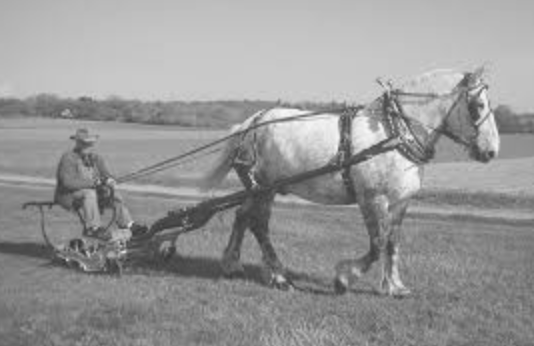
The first horse-drawn mowers appeared in the 1850s, marking humanity's initial attempt to ride while mowing. These contraptions featured the operator seated behind a team of horses, controlling cutting height and direction. While effective for large areas, they were impractical for most residential use and left hoofprints throughout the lawn – hardly the manicured look property owners desired.
The Birth of the Riding Mower
The true riding lawn mower emerged in the early 1900s as gasoline engines became smaller and more reliable. The first motorized riding mowers were essentially modified push mowers with engines and seats added. These early machines were expensive, temperamental, and primarily used by wealthy estate owners and professional groundskeepers.
Ransomes, an English company, produced some of the earliest successful riding mowers in the 1920s. Their machines featured rear-mounted engines and front-cutting decks, establishing a design template that would persist for decades. However, these mowers remained luxury items due to their high cost and complexity.
Post-War Suburban Revolution
The real transformation came after World War II, when returning soldiers and economic prosperity fueled the suburban boom. Suddenly, millions of Americans found themselves with lawns to maintain, and the riding mower industry responded with more affordable, reliable machines.
In 1946, Cecil Pond developed what many consider the first modern riding mower. His design placed the engine in front, the operator in the middle, and the cutting deck underneath – a configuration that improved balance and maneuverability. This layout became the foundation for most subsequent riding mower designs.
The 1950s saw numerous companies enter the market. Jacobsen, originally a manufacturer of golf course equipment, began producing residential riding mowers. Their machines featured improved transmissions and more comfortable seating, making lawn care less of a chore and more of a leisurely activity.
The Rise of Major Manufacturers
By the 1960s, established names like Craftsman (Sears), John Deere, and Cub Cadet had entered the residential market. John Deere, leveraging their agricultural expertise, introduced the Model 57 in 1963, which featured a side-mounted engine and became hugely popular among homeowners.
Cub Cadet, originally part of International Harvester, revolutionized the industry in 1961 with their Model 70. This machine introduced the concept of a separate transmission and differential, providing better traction and control. Their distinctive yellow color scheme became iconic in suburban neighborhoods across America.
The 1970s brought significant technological improvements. Hydrostatic transmissions eliminated the need for clutching and shifting, making operation smoother and more intuitive. Electric start systems replaced temperamental pull cords, and improved cutting deck designs provided better grass discharge and mulching capabilities.
Innovation and Specialization
The 1980s and 1990s witnessed an explosion of features and specialized designs. Zero-turn mowers, originally developed for commercial use, began appearing in residential markets. These machines, with their ability to pivot around their own axis, dramatically reduced mowing time and improved precision around obstacles.
Comfort became a major selling point as manufacturers added features like padded seats, cup holders, and even air conditioning on premium models. Cutting deck sizes expanded from the typical 30-36 inches to 42, 48, and even 60+ inches for large properties.
Safety improvements included blade engagement systems, seat switches that shut off the engine if the operator stood up, and rollover protection structures on larger machines. These features addressed growing liability concerns and made riding mowers safer for casual users.
The Modern Era
Today's riding mowers incorporate technology that would amaze their early predecessors. GPS tracking prevents theft, smartphone apps allow remote monitoring and scheduling, and some models feature fully autonomous operation. Robotic mowers, while technically not "riding" mowers, represent the latest evolution in automated lawn care.
Environmental concerns have driven the development of electric riding mowers with lithium-ion batteries capable of cutting for hours without emissions. These machines offer quiet operation and minimal maintenance while delivering performance comparable to gas-powered equivalents.
Zero-turn mowers have become increasingly popular among homeowners, with manufacturers like Hustler, Gravely, and Bad Boy offering residential versions of their commercial-grade machines. These mowers can cut large lawns in half the time of traditional riding mowers while providing professional-quality results.
Cultural Impact
The riding lawn mower has transcended its utilitarian origins to become a cultural icon. Saturday morning mowing sessions became neighborhood rituals, and the quality of one's lawn became a point of suburban pride. Racing lawn mowers emerged as a motorsport, with organized competitions and modified machines reaching surprising speeds.
The riding mower also democratized lawn care, allowing elderly or physically limited individuals to maintain their properties independently. This accessibility helped preserve the American ideal of the well-maintained suburban lawn across different demographics and age groups.
From horse-drawn curiosities to GPS-enabled smart machines, the riding lawn mower's evolution mirrors broader technological and social changes in American life. What began as a luxury for the wealthy became an essential tool for suburban living, transforming not just how we maintain our lawns, but how we interact with our outdoor spaces. As we look toward an increasingly automated future, the riding mower continues to adapt, ensuring that the weekend ritual of lawn care remains both achievable and, for many, genuinely enjoyable.
Need help repairing your lawn mower? Contact MowWerx at 512-290-2089. We provide lawn mower and small engine maintenance and repair in the Texas Hill Country areas of Spicewood, Marble Falls, Lakeway, Llano and Bee Cave.


It’s also interesting to see how modern technology is taking that evolution further. A Remote control Lawn mower can provide another approach to mowing, especially for areas where maneuverability and operator control are important. It will be interesting to see how remote-controlled and autonomous equipment continue to shape the future of lawn care.